Bridging the Gap
Liebherr crawler cranes on the job in Alaska
By Seth Skydel
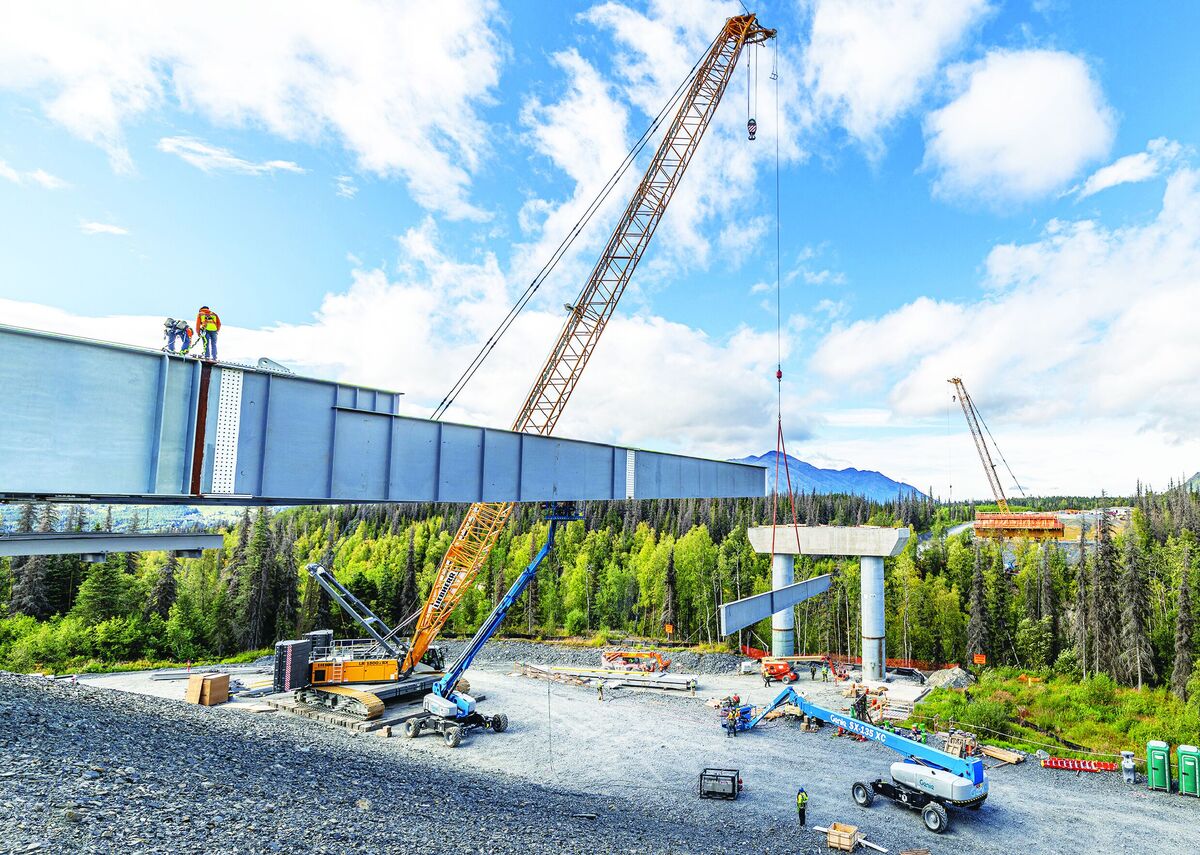
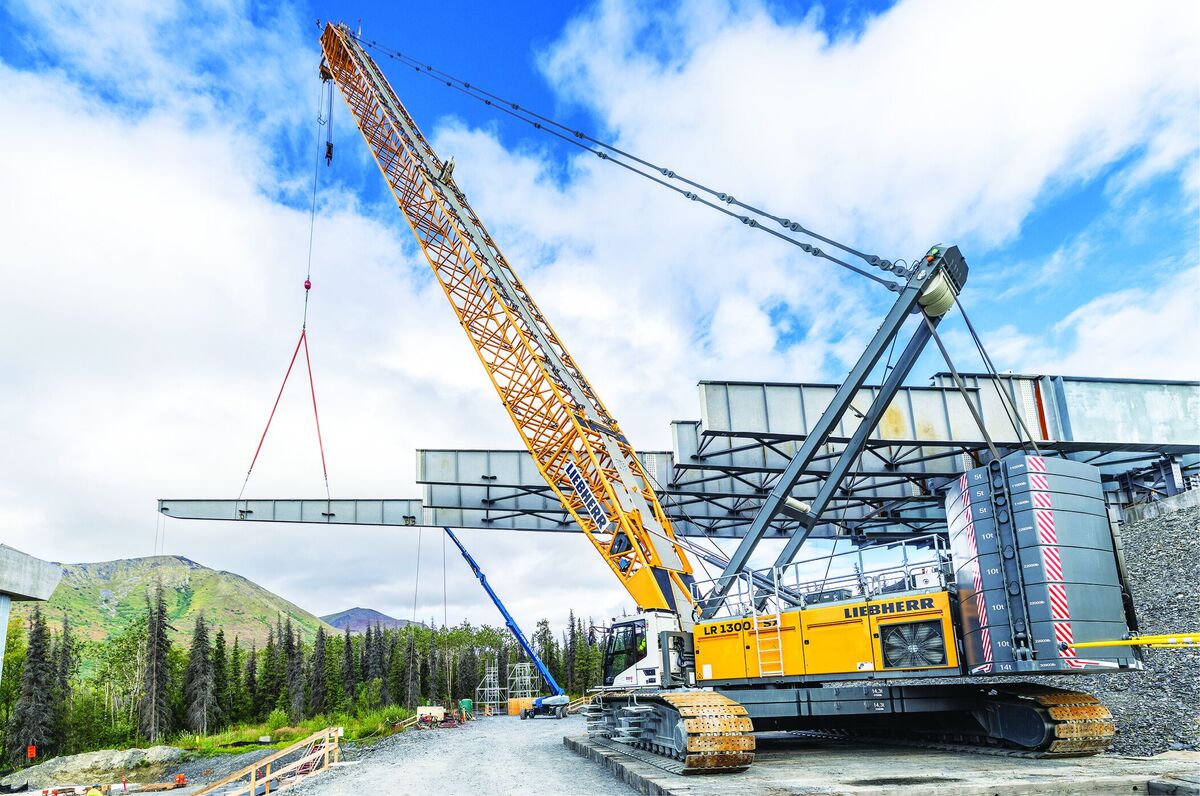
The centerpiece of one of the largest infrastructure projects in Alaska, the nearly 1,000-foot long Juneau Creek Bridge on the Sterling Highway between Anchorage and the Kenai Peninsula is under construction to increase traffic capacity and improve safety. On the jobsite, two Liebherr LR 1300.1 SX crawler cranes are playing a crucial lifting role during the assembly of bridge sections.
Relying on the 331-ton capacity lattice boom crawlers is Traylor Bros, Inc., a heavy civil contractor based in Evansville, Indiana who is well known for the construction of complex bridges across North America. The LR 1300.1 SX, Liebherr’s newest generation LR 1300 crawler boasts a 554-foot maximum hoist height and a maximum radius of 469 feet.
On the Juneau Creek Bridge, only solid steel girders are being used to allow for wide spans and a high load-bearing capacity with minimum material weight. The girders must be aligned with precision to achieve the necessary stability for the bridge. Traylor Bros are carrying out this job with their two LR 1300.1 SX lattice boom crawlers.
Versatility and Capacity
“There were several factors that went into our the decision to choose the LR 1300.1 SX,” said Tyler Becker, senior field engineer at Traylor Bros. “The reliability of the crawler cranes is incredibly important because we have a small window before the weather kicks us out. Any malfunctions would cause massive schedule delays. The LR 1300.1 SX works when we need it and it has the versatility and capacity to handle all the lifts we need to perform.”
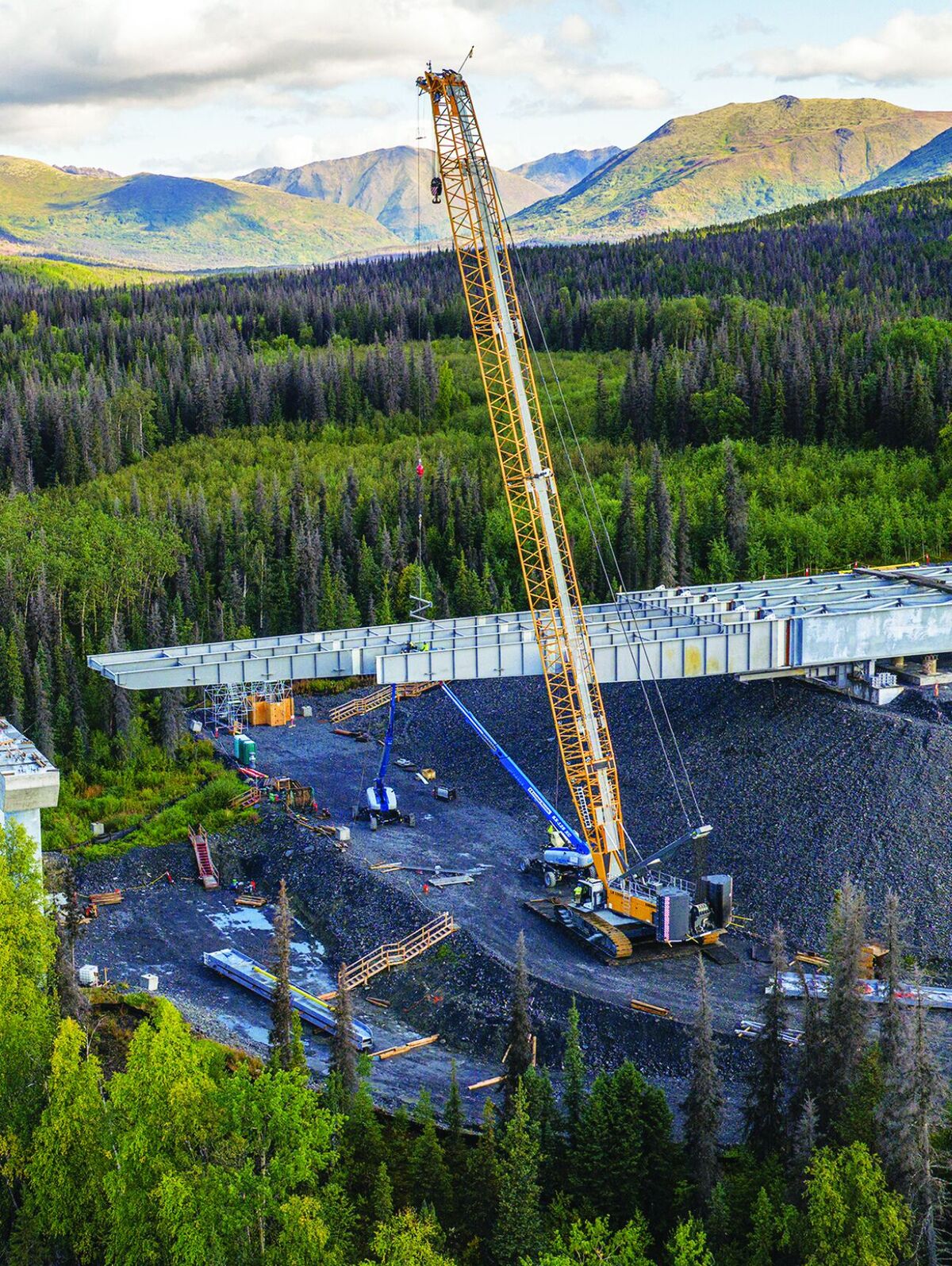
For the bridge project, steel girders are assembled on one side of the Juneau Creek Canyon and then gradually pushed over the deep canyon with hydraulic presses using a bridge launch technique. With this technology, the massive individual sections can be positioned precisely without the need for complex scaffolding across the chasm.
“The most challenging lifts for us were the first girders of the bridge,” explained Travis Ludlow, the operator of one of the LR 1300.1 SX crawlers. “They were very heavy, and we had to rely on a lot of ground people because there were up to 40 mile per hour winds. The crane’s Gradient Travel Aid was also essential for safely negotiating slopes, which were challenging due to the topographical conditions of the project.”
The Liebherr LR 1300.1 SX crawler crane’s control system was also used to automatically calculate the center of gravity and warn the operator before the crane leaves the safe area. While travelling, the operator receives real-time information about the permissible and actual gradient, and the crane’s overall center of gravity at all times. If necessary, the main boom angle can be altered so the machine remains in the safe area.
From Planning to Lifting
At the Juneau Creek Bridge, extreme weather conditions, including heavy snowfall, high winds and wide temperature swings impacted operations. Seismic activity in the region also had to be considered for safety in the event of earthquakes. Additionally, the remote location and surrounding natural habitats required careful planning so any ecological impact could be minimized. Steep slopes and limited access roads also made positioning of large bridge components extremely difficult.
Traylor Bros planned the deployment of the two crawler cranes in advance and also during the work using Liebherr’s 3D software Crane Planner 2.0. By simulating the lifts, the company was able to take all scenarios into account and find solutions for them in advance so that the bridge project could be completed safely, efficiently and on time.